
Introduction
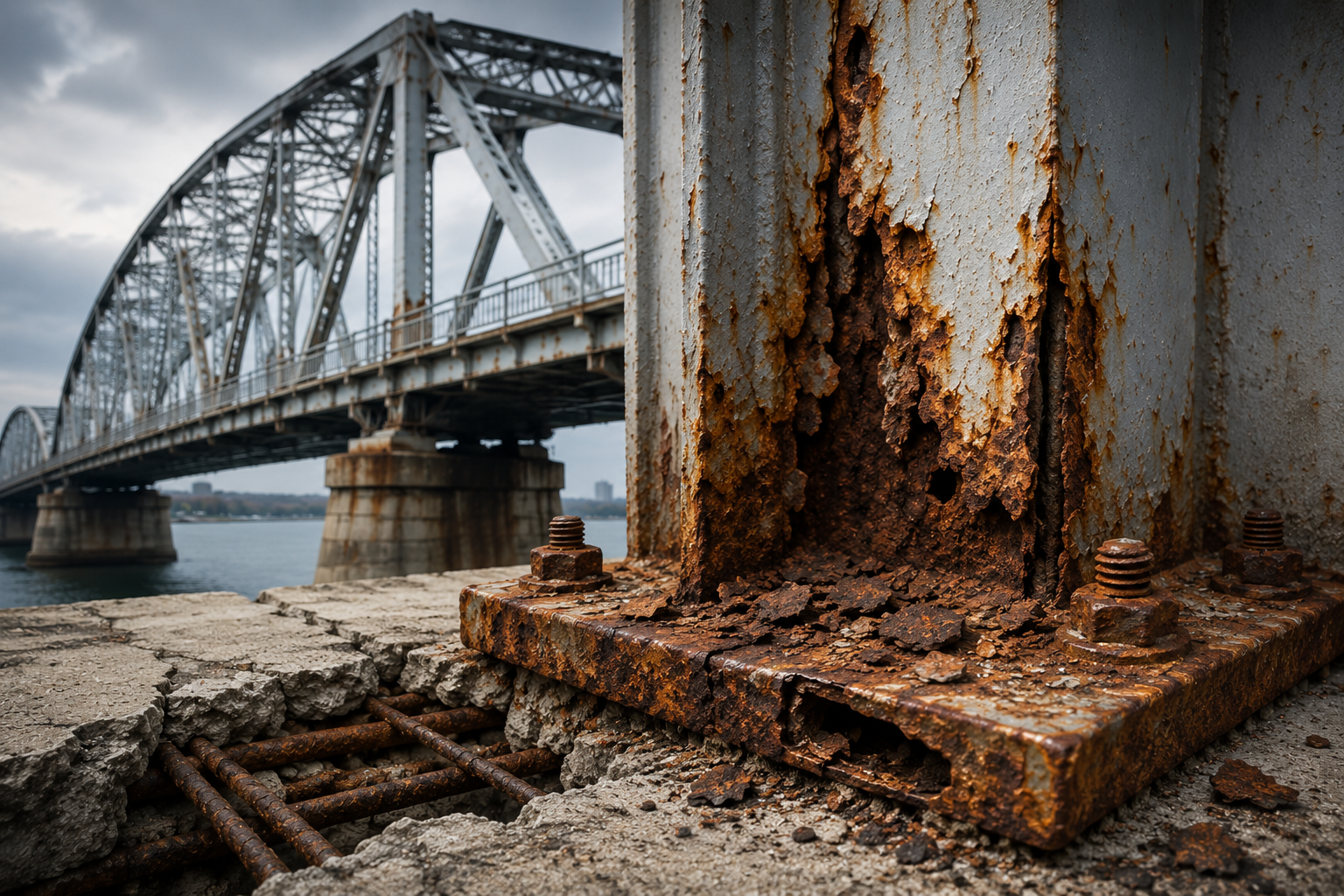
Steel corrosion is one of the most common yet underestimated causes of structural deterioration in buildings and infrastructure.
What often starts as a small rust stain can gradually become a serious structural issue affecting:
- Strength
- Durability
- Safety
- Service life of the structure
In coastal and high-moisture environments like Kerala, corrosion progresses even faster due to chloride exposure and continuous humidity.
What is Steel Corrosion?
- Oxygen
- Moisture
- Chlorides or sulphates to form rust.
- Cracks
- Concrete spalling
- Delamination
- Reduction in steel area
Why Corrosion is Dangerous
1.Reduction in Effective Steel Area
- Diameter reduces
- Cross-sectional area decreases
- Load carrying capacity drops
2.Loss of Bond Between Steel & Concrete
- Slippage
- Reduced composite action
- Poor load transfer
3.Cracking & Spalling of Concrete
- Surface cracks
- Concrete cover separation
- Falling concrete pieces (spalling)
Main Causes of Steel Corrosion
- Coastal areas
- Marine environments
- Water-retaining structures
Moisture, Leakage & Chloride Exposure
Engineering Insight
- Concrete quality
- Exposure conditions
- Moisture levels
Common Site Mistakes
❌ Painting directly over rust
❌ Ignoring leakage
❌ Using poor repair materials
❌ Repairing only visible surface damage
❌ No periodic structural inspection
Signs of Corrosion in Structures
- Rust stains
- Cracks parallel to reinforcement
- Concrete spalling
- Exposed rebars
- Dampness near beams/slabs
Repair & Retrofitting Solutions
Depending on severity:
Surface Treatment
Used for early-stage corrosion.
Rebar Cleaning & Protective Coating
Removes rust and protects steel.
Concrete Repair
Damaged concrete removed and restored.
Jacketing
Used to strengthen distressed members.
Cathodic Protection
Advanced system for critical structures.
Repair & Retrofitting Methods
Prevention Strategies
✔️ Proper concrete cover
✔️ Quality concrete & compaction
✔️ Waterproofing and drainage
✔️ Regular structural audit
✔️ Protective coatings in severe environments
Importance of Structural Audit
- Detect early deterioration
- Prevent failures
- Reduce long-term maintenance cost
- Improve safety
Conclusion
Steel corrosion is not merely a maintenance issue — it is a structural issue.
Ignoring early warning signs can lead to expensive repairs and major safety concerns.
Proper engineering assessment and timely intervention are essential to ensure durability and structural stability.
STUBA can:
Diagnose corrosion severity and suggest appropriate repair and retrofit solutions